Showing posts sorted by relevance for query jetblue. Sort by date Show all posts

Monday, April 9

Pushing Apologies: JetBlue Airways


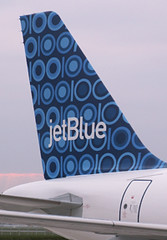
On March 23, JetBlue Airways accepted delivery of its 100th Airbus A320 aircraft, complete with a one-of-a-kind 100-themed blue livery, giving the airline the world's largest fleet of A320 aircraft.

But what could have been a press conference about the growth and success of a low-cost, low-fare, value-oriented business model turns into more of the same: why talk about leg room when you can talk about being sorry?

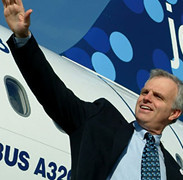
It wasn't just at the JetBlue JFK hangar, decked out with balloons for about 200 JetBlue crew members. And it wasn't only in the March 20 follow-up YouTube video. It's anywhere and everywhere David Neeleman, founder and CEO of JetBlue Airways, happens to be or has anything to say.

It's in the Sun-Sentinel. It's in the Chicago Tribune. It's in the Baltimore Sun. JetBlue is sorry. Neeleman is sorry. All the employees are sorry.

And, when you get right down to it, this has gone on so long — apologizing for winter storms on Valentine's Day that left passengers stranded on airplanes — I'm even sorry, despite having never tried a flight on JetBlue. I'm sorry they didn't read my posts on Feb. 23 and Feb. 22 that both pointed to the same problem JetBlue would face if it did not stop saying "sorry."

It is estimated JetBlue has spent as much as $30 million in overtime, added crew costs, and free flights. Meanwhile, shares of JetBlue are down 18 percent this year. Its customer-first image, despite launching a "Passenger Bill of Rights" immediately following the debacle, remains in the toilet as exemplified by its name being crossed out on the cover of BusinessWeek in a story on companies with the best customer service. And why is this?

Well, when your most powerful and memorable message is entrenched in what some might call your worst mistake for too long, nearly two months and counting, it will become your only message. And in this case, it worked. Nevermind all the good stuff about JetBlue. The only thing that people think about now is that it had problems. And ironically, probably half of the people who know there were problems don't even remember what the cause of those problems were.

All they know, thanks to improper, overbearing, and too much negative messaging, is that JetBlue did something very, very bad and JetBlue is very, very sorry. So sorry in fact, that its endless apologies overwhelm all other messages.

For everything it did right as outlined by Richard Levick, president of Levick Strategic Communications, JetBlue is doing a lot of things wrong. Sure, it could lobby for new industry standards and get out in front of other airlines with sensitivity training designed to make employees think and feel like passengers as Levick suggests (smart stuff), but first and foremost, it needs to shift from negative messaging — over-apologizing — and get back to what makes it, as an airline, different from anyone else.

JetBlue needs to turn off the sob stories related to what Levick calls the "Valentine's Day massacre of passenger rights" and move off the tarmac and up into the clouds.

Unfortunately, it has been apologizing for so long, the transition will take that much longer. You see, from a more simplistic view of the world, it works something like this: negative messages are 8 times more powerful than positive messages. So if it takes 80 impressions to make a positive message stick, we might conclude it takes 640 impressions to erase a negative message. Neeleman and JetBlue have so masterfully elevated the awareness of one problem that the number of positive messages they need to get beyond Valentine's Day might not fit on a calculator. But, even before they can do that, they have to stop apologizing before it's too late.

You see, in addition to their own "problem-centered" messaging are scores of customers since Feb. 14 who blog about every little bad thing as evidence that no sweeping changes are being made. Usually, it doesn't matter whether one piece of luggage is lost for awhile or that a single flight has a delay (those things happen), but now these things mean everything to JetBlue.

The perception is that it had customer service problems, made promises to fix those problems, and cannot deliver on those promises, probably because those promises (in perception, not reality) were too big for anyone to deliver on in the first place. And the only reason this perception exists is because JetBlue made it so.

Look, I'm all for crisis communication as I've outlined and Levick has outlined, but there is also some common sense and practicality that is missing in this case study. It's something I learned as an intern (later, a communication consultant) at Sierra Pacific Resources.

As an intern, my first task was to write a letter of introduction to the communications department. I was so excited that I fired it off and placed it neatly on everyone's desk (no IMs in those days, hey). The next day, I was called into my mentor's office so he could point out two typos. Needless to say, I was mortified and immediately suggested I apologize with a second letter.

"Here's the thing," he said. "Ninety five percent of the department didn't see any errors because they read right past them, but they will all see them if you apologize. So the best thing you can do for the 5 percent, who think I may have made a mistake in picking you as an intern, is to causally address your mistake to them if they bring it up. More importantly, you need to make your first assignment for the company really shine."

Sound advice. No one ever mentioned those typos. And typos were not something they ever saw again, which is partly why I easily transitioned from intern to communication consultant.

Now, I am not suggesting that JetBlue did anything wrong by apologizing in the first place. That was smart. It was crisis communication on social media steroids and it worked.

What I am suggesting is that there is no possible way that JetBlue will ever overcome this crisis if they keep talking about it. As I have said before ... most people take long looks at car accidents (I'm not one of them), but a car accident can only hold their interest for so long.

However, if you force them to look at your car accident, in painstaking detail, long after they are interested in something else, then they'll become disenfranchised and tune out all your other messages. Or worse, they'll become disgusted or even angry at you and your company.

Digg!

Thursday, February 22

Jumping The Shark: JetBlue

JetBlue Airways has always been about innovating a new airline, one that offers value, service and style. It does things differently, from leather seats with 36 inches of leg room and free DIRECTV to name brand snacks and sommelier chosen wines. So maybe it's no surprise that the airline is deploying a slightly different brand of crisis communication, which includes appealing its apology to the court of social media and anyone who will listen.

At a glance, the crisis communication strategy that began after an ice storm caused the airline to cancel more than 250 of 505 daily flights and significantly delayed 10 flights on the tarmac with customers waiting on board for hours, seems pretty spot on. The airline was relatively quick (some say too slow) to acknowledge, apologize, explain, learn from, satisfy public interest, and offer restitution, and has taken all of this to the media, social media, company blog (flight log), and even YouTube.

A few people might notice I left empathy off the list, but not because COO David Neeleman missed the mark. On the contrary, Neeleman is one of the most credible corporate spokespeople I've seen appear during a crisis in some time. He obviously knows that sometimes the messenger is the message. In a net assessment of comments all over the place, it seems people want to believe him because it's nearly impossible to see anything but sincerity in the man. Personally, I believe him.

I'm not alone. Despite cutting earnings guidance for the quarter, traders on Wednesday sent JetBlue shares up about 2.2 percent to close at $12.19 on the Nasdaq Stock Market. Several analysts has even said JetBlue's numerous apologies may help stave off long-term pain for investors.

"We believe that JetBlue's PR efforts since the last weekend have been rather successful at expressing humility and embarrassment about the problems," wrote Morgan Stanley analyst William J. Greene in a note to clients, according to The Associated Press. "This mea culpa has likely gone a long way to mitigate customer frustrations."

Although some less trusting public relations practitioners are considering the "spin" factor, I remain unconvinced that JetBlue is simply spinning. However, I can agree that it may be jumping the shark. I'm not saying it is; I'm only recognizing the potential.

Can you apologize too much? Can you produce too many course corrections in the aftermath of a crisis? Can you make a crisis bigger than it needs to be, even with the best intentions? Can you reach out to too many people in an attempt to offset negative impressions, involving those who probably didn't need to be involved (how many YouTube enthusiasts fly JetBlue or how many JetBlue customers visit YouTube)?

I'm not saying what it has done is wrong or right as only time will tell, but maybe, just maybe, it has accepted too much responsibility, coming up just short of apologizing for an ice storm, which no one believes it caused. Sure, mistakes were made and it's admirable JetBlue identified several. The Customer Bill of Rights is a good idea, but I wonder if the timing was right. Some people think so, according to the Contra Costa Times.

"JetBlue is taking a mistake and using it not only to address their own mistakes, but to set new standards for the entire industry," Richard Levick, chief executive of Levick Strategic Communications Inc. in New York, said in an interview Tuesday. "David Neeleman is running to the crisis. He is everywhere, saying, 'I'm responsible and I'll fix it.'"

Without question, it is always an interesting case study when someone launches a public relations and advertising campaign out of a crisis communication plan, especially when the concept could perhaps head off congress imposing a federal Customer Bill of Rights (I hope the industry doesn't see increased government regulation and demonstrates it can be adept at governing itself).

So at the end of the day, we fall somewhere in the middle. There is little question that JetBlue has demonstrated savvy in crisis communication, but one wonders if the success of the initial effort will eventually lead it to jump the shark.

But even if it does, you have to recognize JetBlue will likely receive continued support from some of the most loyal customers in the industry. While I have never flown JetBlue, I know plenty of people who do. They always rave about their flights and look surprised when I mention I have yet to board that airline, as if one has not flown until they've flown JetBlue.

Digg!

Friday, February 23

Discussing JetBlue: Levick

Richard S. Levick is the president and CEO of Levick Strategic Communications, which was named Crisis Agency of the Year in 2005 by The Holmes Report. The report provides in-depth news analysis and features on trends and issues in the public relations business.

Levick's firm, which has offices in New York, Washington D.C. and London, directs high-profile communications, including: the Catholic Church scandals, the spinach e-coli crisis, large legal and regulatory actions globally, and a number of the most significant matters arising out of the Middle East and Latin America.

Levick has been making the rounds in the media, discussing JetBlue and giving it high marks in handling its crisis. Recently, in an interview with ConsumerAffairs.com he said "JetBlue has run to the crisis, taking responsibility not just for itself but for the entire industry."

Specifically, Levick outlined what he calls five key tenets of sound crisis management:

• Run to it. Avoid "duck and cover."
• All companies will have a crisis. Be prepared.
• Know your crisis team. Now.
• Make a sacrifice. Companies often want to win it all.
• Avoid saying "no comment." A crisis abhors a vacuum.

"The critical role is to run to the crisis," he told ConsumerAffairs. "People don't want to sue people they like and trust. What happens so often is that CEOs lawyer-up and say nothing."

On any given day of the week, I would agree with Levick. It's sound advice, pure and simple, except something with JetBlue has not sat well with me. In between discussing the finer points of introducing an abbreviated name in a new release to sharing some real life crisis communication situations I've worked on to about a dozen student public relations professionals last night, I think I decided what it might be. There are some fine details missed by JetBlue, and American Airlines might have noticed.

Anyone can write up some crisis communication points, but the devil in the details is how those points are interpreted and applied to a unique crisis communication situation. For example, if you overlay Moving Beyond Bad News, which we presented a few days ago, you might come up with the notion that JetBlue did everything right too. Or not.

Here are a few key points from that list that seem to be making a difference:

Have you satisfied the public interest? If you want to move beyond bad news, you have to commit to regularly reporting additional information until no public interest remains. In JetBlue's case, it may be oversatisfying public interest. It could very well be that it has apologized so much that the effectiveness of the apology is wearing thin.

Have you included positive steps being taken to address the situation? Naturally, this is being addressed by JetBlue's Customer Bill of Rights. Unfortunately, one might wonder if it forever branded the Customer Bill of Rights to the original crisis. Perhaps it would have been better to wait a few weeks, after resolving the remedy specific to the incident.

Did you offer restitution? As much as JetBlue has been apologizing, it seems to me it has buried the fact that it did indeed offer restitution. So much so, some people don't know that the airline's future plan includes giving passengers aboard departing planes delayed for three to four hours a $100 voucher if the voucher would be equal to the amount of their round-trip ticket. Given the amount of money spent on paid advertising apologies by the company, one might also wonder if that money would have been better spent with the passengers aboard the planes.

Perhaps it's these small weaknesses in the plan that reinforced American Airlines decision to beef up service at Kennedy and LaGuardia airports, a move that will put additional pressure on Delta Air Lines and JetBlue. American Airlines has said that its plans are unrelated to JetBlue, and the Newsday article includes that JetBlue folks believe the plan will not have any impact.

For public relations practitioners, I hope this also provides some conversation in understanding that formulas, bulleted action plans, are great for guidance, but are never absolute. Every crisis communication situation is different, and requires a modified course of action.

Worse, if everyone over apologized all the time about things that were at least partly out of their control, sooner or later, the public won't believe any of them, no matter how sincere or appropriate the message and its meaning. That said, please don't allow me to convince anyone that JetBlue is doing something wrong. Contrary to that, they are doing more right than most.

Digg!

Monday, May 21

Landing Loudly: David Neeleman

.
Ever since David Neeleman stepped down as CEO of JetBlue "to focus on more long-term strategic initiatives for JetBlue as Chairman of the Board," his famous blog, called a flight log, has stood silent.

The last post penned by Neeleman gives an outstanding welcome to Dave Barger as CEO, but leaves the people who enjoyed Neeleman's online presence one question unanswered: Will Neeleman's flight blog remain the last word of an airline founder who saw the value of social media or will Barger now brave the relatively untested waters of CEO blogging?

The question isn't so much for JetBlue as it is for any corporation that has taken the plunge. As more executives take to blogging or achieve near celebrity status as very visible spokespeople for their companies, it becomes crystal clear that very few have thought about a social media contingency plan.

What happens when visible voices become embroiled in controversy or step aside as Neeleman did? One would think the Robert Scoble story would have better prepared companies for such eventualities. Microsoft fared pretty well with a transition in 2006, but it seems like not all companies will.

While ADWEEK's May 21 article doesn't provide the answers, it does recognize a change in the perception of company branding with a renewed marriage between marketing and customer service.

"Blogs, online video, e-mail and mobile phones—not to mention company and brand ratings on sites like Amazon and Yahoo—give the average consumer an immediate, interactive soapbox on which to share how Company X let them down," writes Joan Voight. "In today's consumer culture, a humorous video on YouTube featuring a cable repairman sleeping on the job gets far more attention than the well-established American Customer Satisfaction Index from the University of Michigan—an index that due to its business press-oriented nature can't compete with the Web."

The article also mentions JetBlue Valentine's Day crisis and its efforts to employ a largely unproven social media tactic as part of its crisis communication strategy. In our case study, we noted that while the effort was to be commended, JetBlue only did everything almost right. Unfortunately for Neeleman, if you subscribe to ADWEEK's assessment that it was the "episode, dissected on blogs and elsewhere, even brought down the airline's high-flying founder and CEO David Neeleman," almost was not enough to win over JetBlue stakeholders, who seemed to think the easiest way to end the over-apologizing was to shuffle their spokesman off the stage (for awhile anyway).

Left behind is a flight log (blog) that will require some pretty big shoes to fill unless Neeleman re-emerges as the very verbal and likeable founder of the airline.

Indeed. The communication game has changed and executives are taking more heat over the attention they receive as their personal brands and actions sometimes eclipse the company they work for. As a result, some now have bigger targets on their backs as sacrificial lambs when things go wrong.

Some are shuffled around or let go for a single company slip like Neeleman or Jim Samples. Others are dismissed for what the Toronto Star, a few graphs down, calls terminal uniqueness (n. Psychological condition afflicting top executives suffused with a sense of omnipotence, until their bad behavior bites them in the behind) like Chris Albrecht, Julie Roehm, and Todd Thomson.

Sure, something is being done. You cannot pick up a communication-related publication today without reading about social media. However, far too many communicators are not sure what to do with all this information because they thought the opening rounds were nothing but a fad.

Unfortunately for their employers, this means mistakes—including leaving well-read blogs quiet because no one ever short listed possible replacements (or signed several executive bloggers/spokespeople to begin with)—will continue to be made until communicators realize that the fast-paced trend to become more customer-centric instead of product-centric means more social media attention on company executives, whether you ask for it or not. (Something CBS is discovering right now.)

So, unless social media is carefully employed as part of your company's overall strategy, sooner or later, you will be left with the wrong message, or perhaps, no message at all, where customers expect to find it. Whether "it" means a flight log or something else entirely. JetBlue. Case study closed.

Digg!

Tuesday, November 20

Flying Cargo Class: The Airline Industry


Zagat Survey today announced the results of the 2007 Zagat Global Airlines Survey. Singapore Airlines took top honors as the best international economy class and Midwest Airlines pulled the No. 1 spot for domestic economy class again. Midwest Airlines has taken top honors in the past eight Zagat surveys; Virgin America and JetBlue Airways followed as No. 2 and 3.

While social media proponents might consider crowing that the number one and number two domestic Web sites both support well-planned blogs, the real communication lesson for the airlines comes from Zagat participant comments that pinpoint the state of the industry. Here are a few favorites:

“I’d rather be a package on FedEx.”

“The legroom is great if you’re a yard gnome.”

“Their planes make Larry King look young.”

“I thought the Geneva Convention prevented this kind of thing.”

“Only good thing about first class these days is that you get to leave the plane first.”


Ouch!

JetBlue continues to score big with its fans despite the “nightmare delays” last winter. But all is not bliss as public relations professionals like to claim. JetBlue continues to balance leather seats, satellite TV, and happy crews, and decent snacks against rising prices, limited routes, and points that expire.

Still, third is a long way from the bottom, an honor that belongs to U.S. Airways, which came in last among domestic airlines. (And Philadelphia International came in fourth from the bottom among airports.) Hmmm … I wonder why.

The survey covered 7,498 frequent fliers who rated 84 airlines and 46 major airports. Each airline was separately rated on its premium and economy service for both domestic and international flights. The typical survey participant took 19.7 flights in the past year aggregating 147,000 trips. For complete results from domestic and international carriers, visit Zagat.

Digg!

Thursday, April 5

Validating Critics: Jeff Hunter

While this post touches once again, ho hum, on Jason Goldberg, CEO of Jobster, it is not about Jason Goldberg. If you want another post on him today, visit Workfarce. It's not a great post, but it is an interesting continuation on communication myths that seem to creep in as well as a fine example of the the love-hate relationship some fans seem to have from the nosebleed section.

Personally, I'm more interested by a comment left by Jeff Hunter on Cheezhead, which originally sparked the revival of the Goldberg discussions. Hunter quoted President Theodore Roosevelt:

“It is not the critic who counts, not the man who points out how the strong man stumbled, or where the doer of deeds could have done better. The credit belongs to the man who is actually in the arena; whose face is marred by the dust and sweat and blood; who strives valiantly; who errs and comes short again and again; who knows the great enthusiasms, the great devotions and spends himself in a worthy cause; who at the best, knows in the end the triumph of high achievement, and who, at worst, if he fails, at least fails while daring greatly; so that his place shall never be with those cold and timid souls who know neither victory or defeat.”

Now, Roosevelt was an amazingly smart and astonishingly multifaceted man. He is one of my favorite leaders in American history and you can read more about him at Theodore Roosevelt Association. His quote, above, made a lot of sense within the context of what he was talking about.

However, and I mean no disrespect to Hunter, I don't think it applies to social media. Sure, it's the cornerstone of the argument that "only Jason Golberg knows what's happening at Jobster" so you have no right to write about him even though he wants to be written about, unless you're promoting his message, whatever that might be.

Perhaps because I've worked as a paid journalist/critic (about 10 years total experience or so) — dining reviews, show reviews, tourism reviews, company reviews, political reviews — it's easier for me to see the distinction between armchair quarterbacking, customer feedback, journalistic feedback, and what occurs within the context of social media.

Not always, but more often than not, the purveyors of blogs are more than merely critics. On the contrary, they are the very people whose faces are marred by the same dust and sweat and blood that mars the people they write about. And I, for one, do not see criticisms as criticisms as much as I see them as conversational discussions between industry leaders to guide the direction of the industry and ensure it is not shaped by someone who might very well be wrong.

This was one of reasons I began changing the format of my blog in mid-August last year. I saw people shaping the direction of communication through social media (and I am not saying they are all wrong), but they didn't know much about strategic communication. Many of them were too busy being "agents of change," willing to blow up everything in favor of, well, nothing … provided they can put their name on it.

While the thought is well intended, I don't agree with the idea that criticisms jeopardize any industry, provided that those criticisms are valid or at least lead to some other validity with open, honest communication (short of malicious intent).

Further, I don't believe it needs to be the obligation of industry leaders to lift every other industry leader up in the face of adversity for the betterment of the industry. In fact, I have been a board member of too many non-profit professional organizations where out of the well-intended notion that "we all need to support each other and every idea all the time" came erroneous actions that resulted in the death or near-death of an organization or program.

Ergo, criticisms are only invalid when the discussion of an idea gives way to popularity contests between people and not their ideas or undue polarization of an issue where people try to convince everyone that it is either all or nothing, black or white.

Recently, Jim Durbin rightfully took me to task when he wrote that I stretched too much in my attempt to take "a major issue issue (the January layoffs and Goldberg's December posts), and conflating them with other issues that are not related and of the same magnitude." While the stretch was intentional, though not obvious enough as I conceded, kudos for Durbin.

That is the way it should be. In fact, had it not been for his post, I may have never dug a little deeper and visited Blogpulse. If you trend "Jason Goldberg," you'll see my stretch wasn't all that far off. The largest spikes tend to be the result of negative news and commentary, including one some might call an insignificant disagreement between two bloggers.

In the realm of social media, it seems that exchange has as much impact as any. Perhaps even more telling is this: on the same day the "Knowing When To Post" went up, Richard S. Levick, president and CEO of Levick Strategic Communications, posted a comment on my February "Discussing JetBlue" post, which I responded to. Those two comments on JetBlue beat out Jobster 5-to-1. (Heads up: I'll revisit JetBlue on Monday.)

What does this mean? Well, that has never happened before. So could it be that interest in Jobster has waned? Maybe. At minimum, when bad rumor spikes begin to outweigh good news spikes, it's time to rethink your strategy. Sure, people gawk at car accidents, but car accidents will only hold their interest for so long.

Anyway, thank goodness for people like Durbin who take the time to ask questions and offer comments. If people like him stopped doing it, then entire companies, organizations, industries, and countries could be led in the wrong direction. But then again, what do I know?

I only know that not so long ago, a public relations professional engaged me in an e-mail exchange that insisted my critique on his non-recruiting client's release was unfair and unprofessional. Then, he basically asked me to shut up. Who am I to argue? If he wants to insist that silence is golden, then so be it. I won't write about his client again, which is a shame, because I had some good things to say.

So I wonder what would have been worse: writing up his second public relations debacle or not writing anything at all...

Critics. We don't always like them, but maybe we need them.

Digg!

Wednesday, January 3

Managing The Message

“I still feel like a passenger on that JetBlue flight that's watching helpless on my seatback satellite TV as the plane I'm on makes a crash landing,” said one Jobster employee about the recent interest in Jobster, fueled largely by one of the most horrifically handled communication accidents in recent memory. Unfortunately, unlike JetBlue, not all passengers will be landing safely.

According to Jobster, the reorganization to better align its business to focus on the most efficient sales and support channels, as well as its Website, will result in the loss of 60 positions, primarily those supporting in-person sales and support efforts. From a communication perspective, Jason Goldberg and Jobster — which maintains their first priority was to inform affected employees who were left waiting for days to learn their fate in between ill-advised blog posts — lost much more than that.

Although it reads as one of the better posts ever presented under Goldberg's byline, one that causes me to sincerely hope Jobster's smaller and more focused vision for 2007 will return the company to the start-up success story it was in 2004, I wonder if it will be enough to erase the reputation damage it endured externally and employee morale flogging it weathered internally.

You see, reputation management, which includes crisis communication as noted in my last Jobster-related post, can be equal to if not superior to a successful product. When you lose control of it, which is relatively easy to do, it's difficult for anyone to believe your next message.

If we subscribe to the ideal that it takes 80 impressions to make a message stick (and that negative impressions are eight times more impactful than positive messages), Jobster's rebranding as a company and employer that can be trusted will be a difficult, though not insurmountable, task in the year and years ahead.

The reasons are simple enough. As much as we (especially those of us in the advertising and communication field) would like to believe that we control the definition of our company or clients' companies, we really don't most of the time.

Instead, companies are defined by everything executives and employees communicate about themselves daily (whether written, spoken, or by action); everything executives and employees say about the internal working environment; everything others (from members of the media and bloggers to customers and competitors) say about the company, whether real or perceived; and everything other companies (primarily competitors) say about themselves, which causes people to wonder if the company measures up.

At the end of the day, you add up all these messages and therein lies the "real" (not self-perceived) definition of a company. While there are strategies in managing all these messages, most companies or even advertising agencies do not know where to begin. I'll work harder at sharing some insight here and there for those who care to know; most answers take longer than the single confines of a post to appreciate (and that's not to say I have all the answers), starting with eight questions to ask yourself if you are managing your reputation, which I'll share tomorrow.

To all the other social media experts and bloggers who have contributed to (and will continue to contribute to) this living case study, my gratitude. To all the folks remaining at Jobster who read my posts, I sincerely hope you did not find my criticisms and comments too harsh, but an attempt to provide objective commentary. To Jason Golberg, I hope you keep up honest blogging, perhaps though, with a bit a more sensitivity to the message you want people to read. And to all those who are being asked to leave Jobster, this too shall pass. Good night and good luck.

Sunday, August 22

Considering Customers: Fresh Content Project


When you really stop to think about it, most customer communication is remarkably backwards. Most of it seems to run contrary to face-to-face communication. Sure, when customers call or are standing at a counter, customer service agents tend to ask questions. Did you find everything okay? Can I help you? What else can I do to make your stay with us better?

Take these same organizations online and all the questions evaporate. Suddenly, every customer contact becomes: let me tell you more about me, my product, my organization, and how great we are. The same holds true when the media calls. Questions are quickly answered with statements: let me tell you more about us, our policies, and what it is we want you to know.

It's weird. And I'm not the only who thinks so. All five of these posts carry a warning against making the conversation about "you" when it really ought to be about "them." Imagine what might happen if more of this communication focused on serving customers instead of the organization.

Best Fresh Content In Review, Week of August 2

• Emotions, Trust, and Control at the Heart of the Customer Experience.
Valeria Maltoni shares some insights on how service organizations can make customer experiences more positive by considering how CRM can create a customer advantage. Among the points: professional appearance, clear communication, active involvement, likability, willingness to take the high road, and follow up can all contribute to better customer service. But most importantly, she also reiterates that setting customer expectation is invaluable. It sets a foundation for stated excellence.

• 5 Reasons Why No One Is Reading Your Email Newsletter.
Sean D'Souza pulls out all the stops in pinpointing why many e-newsletters aren't read. His list of reasons include that the information isn't helpful, the voice isn't compelling, they don't tell any stories, they don't have a specific frequency, and they contain half-hearted calls to action. All of his points are true, with several that overlap. For example, many of the e-newsletters I receive talk mostly about themselves without any attempt to sell anything. No surprise, agency newsletters are among the worst. Most recap how great they are, demonstrate how little they understand about the tips they share, and never provide anyone a compelling reason to call them. After three issues like that, we mark them spam but the agency won't even know it.

• Community Is About People And Interest, Not Technology And URLs.
Almost every ad agency, public relations firm, and social media consultant sells social on its ability to create a community. Then, they go out of their way to fill Web sites and social networks with people who never visit again. Why? They don't know anything about building an online community. Francois Gossieaux understands this fact well enough, reminding organizations that people are less interested in them than some common interest between them and the product or service. Exactly.

• JetBlue – Right Things, Wrong Ways.
So, some flight attendant has a meltdown, berates a passenger, steals some beer, and jumps down an inflatable slide to exit the plane. For most companies, this is a no-brainer crisis communication scenario. Unfortunately, JetBlue isn't most companies. Its track record for crisis communication sucks. This time around, it turns the flight attendant into a folk hero and ends up eating crow. Mike Schaffer picks up two of the most obvious mistakes — waiting the next day to suspend the attendant and commenting that they "weren't going to comment." Ho hum.

• Do Websites Still Matter?
Using an article by Pete Blackshaw, editor of Advertising Age Mobile, Shane Kinkennon addresses the growing trend that most organizations are using their Web sites as a home base and their outreach on rented space. Kinkennon reinforces the idea that the problem isn't the Web site as much as it is the communication most organizations put up on their Web sites. It's generally not engaging, participatory, or helpful beyond recapping product specs and providing contact information. It's a good point. Web sites will matter, assuming they do something other than talk exclusively about the organization.

Want to review more Fresh Content picks? Click on the Fresh Content label or join the Fresh Content Project on Facebook.

Sunday, July 1

Covering Hot Topics: Second Quarter 2007

Every quarter, we publish a recap of our five most popular communication-related posts, based on the frequency and the immediacy of hits after they were posted. While we base this on individual posts, some are related to larger case studies.

Jericho Fans Make Television History

When CBS executives cancelled Jericho over Nielsen ratings, fans of this post- nuclear terrorist attack/small town survival drama went nuts, literally. Using the Internet and social media as their point of organization, they launched the largest cancellation protest in history: sending 40,000 pounds of nuts (from just one store); rallied almost 120,000 petition signers; cancelled CBS related-cable subscriptions; boycotted network premieres; sold network stock; sent in countless letters, postcards, and e-mails; captured media attention in every major newspaper and tabloid; and flooded the network with phone calls. Within a few weeks, CBS reversed its decision in record time, heading off what was quickly becoming an exercise in crisis communication. Of all the posts, pointing out the error in CBS’ marketing of Jericho took top honors with over 10,000 hits.

Link: Jericho

Wal-Mart Strikes Back Against Julie Roehm

If networks are looking for a new made-for-television docudrama, the ongoing Julie Roehm story continues to turn heads (and maybe stomachs). Filled with twists, turns, sex, back room deals, character defamation, lawsuits, countersuits, media bias, allegories, and more spin than the planet Jupiter (which rotates once every 10 hours), this story demonstrates the pitfalls of second-tier executives becoming public figures and the companies that keep them. In the end, if she has any credibility left, Roehm’s personal brand will always be linked to the short-lived, um, alleged Wal-Mart funded affair with a subordinate, her master-class ability to spin herself into another lawsuit and, according to the Chicago Sun-Times, being more indestructible than a cockroach.

Links: Julie Roehm, Wal-Mart

Digital Media Will Change Everything

While some might say it was the very loose Jericho link, we like to think it is related to the increasing interest in the future of digital media, specifically how old media is becoming new media. When we gave some attention to how News Corporation and NBC Universal are speeding ahead with the addition of FUEL TV, Oxygen, SPEED, Sundance Channel, and TV Guide as content partners committed to bringing programming to Web video consumers, people wanted to know what it might mean. To us, it means that one day very soon, broadcast news and entertainment will be forever fused with the Internet, people will access it all via versatile technologies like the iPhone, independents will have the potential to break into the big leagues overnight, and businesses will fully develop what we sometimes call income marketing.

Links: Digital Media, NBC Universal, FOX

Paris Hilton Splits Public Interest

We don’t know about you, but Mika Brzezinski of MNSBC perfectly captured the public’s sentiment over Paris Hilton. In a YouTube clip, Brzezinski refuses to lead the news with Hilton, but then goes on and on about how she refuses to cover it, making her refusal to cover Hilton carry on probably three times longer than if she would have just read the script. Love her, hate her, love to hate her, or hate to love her, we’re not buying that you’re not interested because if we post about her, we always see spikes even though we generally only cover communication side items like blaming publicists, marketing humor, and overly long media statements from jail. Hmmm… maybe that’s why Hilton took second against Roehm in terms of most read public figure.

Link: Paris Hilton

The Office Parodies A Public Relations Nightmare

Although some follow-up stories to JetBlue and Jobster came close, NBC Universal's 2006 Emmy Award-winning show, The Office, proved fictional crisis communication is sometimes more fun than real life. For our part, we wrote up how The Office episode "Product Recall” mirrors how executives sometimes allow a crisis to run away from them by applying “tried and true” communication strategies. In the show, Michael Scott (Steve Carell), regional manager of Dunder-Mifflin, applies the practice of “always running to the crisis and never away from it” after a disgruntled employee at the paper mill put an obscene watermark on one of their most popular paper products. The operative word in this case is “always.” Crisis communication rules are only guidelines, silly.

Link: The Office

It’s very promising to see non-bad news posts starting to give bad news posts a run for their money. We're still hoping good news and educational posts might one day dominate the top five (admittedly doubtful). For example, when it comes to social media, we’d love to see more attention given to our underpinning concept that strategic communication is best suited to drive social media despite the fact that most companies seems to be trying to do it the other way around.

Anyway, while those were the top five posts (and related case studies) for the second quarter, several others came close (and almost all of them beat out last quarter). Runners up (no order): Fans of the The Black Donnellys lobby for HBO to save the canceled NBC show; PR bloggers made a non-issue into an issue over Nikon; JetBlue proved you really can overapologize in a crisis; Jason Goldberg of Jobster goes a whole week or so before behaving badly again; and our sum-up of Harris Interactive mobile advertising research despite my initial skepticism, mostly fueled by a not-so-great Webinar release.

So there you have it, except for one very, very important ingredient: thank you all for dropping by, adding comments, promoting several stories, and continuing to bring communication issues to our attention so we may offer up our sometimes serious, sometimes silly take on them. Whether you agree or disagree, all of it lends well to the discussion and I appreciate those who remember to target the topic and not each other in providing input.

Digg!

Thursday, July 12

Calculating Identity: Career Distinction


After visiting Career Distinction and running its Online Identity Calculator on Tom Cruise yesterday (check the comments on the post), we started to wonder what would happen if we plugged in more people, ranging from notable bloggers to CEO bloggers to CEOs with no direct social media presence.

The mix is pretty eclectic, but it provides some interesting results. Keep in mind that our formula is less than scientific: we used the calculator (beta) to establish whether these individuals have an online identity that matches up with what seems to be their desired personal brand. Since the calculator only offers generalized definitions, we summed up the first three pages of a Google search.

Seth Godin — Digitally Distinct, 10
Desired: A bestselling author, entrepreneur, and agent of change.
Online: A leading marketing author and popular business blogger.

We picked Godin mostly because we had a hunch he would set the high water mark and, no surprise, he did. While there seems to be some slight variation between his desired and online brand, it’s only because the Godin brand overshadows the company he founded, Squiddo. In sum, his brand trends toward top online marketing expert/author (rather than entrepreneur and agent of change) and there is nothing wrong with that.

Johnathan Swartz — Digitally Distinct, 10
Desired: An approachable, likeable, creative, and unconventional CEO.
Actual: An approachable, likeable, creative, and unconventional CEO.

Swartz is the top CEO blogger for a reason. There is virtually no distinction between his online identity and his desired brand — he always presents compelling non-techno babble information to help businesses understand that technological advancements mean market opportunities as opposed to business threats. He does a near perfect job setting the cultural tone of Sun Microsystems and his views mirror what we’ve said for two years.

Jeffrey Immelt — Digitally Distinct, 9
Desired: A hardworking strategist who helped turn General Electric around.
Actual: A relentless workaholic whose biggest hope is everyone else can keep up.

Given Immelt devotes 12 weeks to foreign travel as one of our nation’s leading advocates for globalization, we’re not surprised he doesn’t have time to establish a direct social media presence. Still, as a Fortune 500 company CEO (top 10), others present who he is fairly well, with one small caveat — as much as he is admired, skeptics water down his ideas (despite results), leading us to believe he could score a 10 with a direct presence on the Internet.

Alan Meckler — Digitally Distinct, 9
Desired: A serious business executive and aggressive online CEO.
Actual: A straightforward executive who calls it like he sees it.

As one of the top 10 ten CEO bloggers, we’re not to surprised to see Meckler also scores near the top. There are some identity discrepancies, primarily because his writing and interview style come across as a tough-as-nails CEO when he’s much more approachable than that. Also, his view of Jupiterimages is obviously a bit biased when compared to his view of competitors, but we wouldn’t expect otherwise.

Scott Baradell — Digitally Distinct, 9
Desired: Accomplished brand strategist with corporate communications and journalism experience.
Actual: Journalist turned public relations strategist, which might explain why he never takes the industry too seriously.

With Baradell’s emphasis on public relations, media analysis, and blog entertainment, his online identity tends to shift away from brand strategist. But where his online personality works is that he is unquestionably adept at keeping things interesting. For evidence: check Media Orchard’s R Rating and his anagram post plug of Occam’s RazR among others.

Geoff Livingston — Digitally Distinct, 9
• Desired: A leading marketing expert and top-ranked marketing blogger/author.
• Actual: A seasoned marketing pro, social media analyst, and blogging guru.

For the most part, Livingston has achieved his desired online identity, especially since he has already been recognized as an area marketing blog guru by The Washington Post. Without question, he has some great posts that often cross over into legitimate trade journalism. With a book set for release and several post serials worth reading, he’s coming close to the tipping point. If there is one area to improve, it’s remembering that too much focus on others won’t brand you as a leader.

The Recruiting Animal — Digitally Distinct. 8 (7)
• Desired: The most outrageous and entertaining recruiting blogger and online radio host in history.
• Actual: The most outrageous and entertaining recruiting blogger and online radio host in history.

There is little doubt that The Recruiting Animal has achieved his online identity. He is a classic example of being positively infamous, with his stage name often appearing where you least expect it (even in places his peers might have missed). What’s equally interesting to me is that if we plug in The Recruiting Animal’s real name, his score drops to Digitally Dabbling, but all of the information about him remains on target (just slightly more serious).

Les Moonves — Digitally Disastrous, 8
Desired: A seasoned old school programmer who became CEO of a leading mass media company.
Actual: A CEO with a dated programming vision who calls the shots with little explanation.

Given our coverage of the Jericho cancellation protest (and reinstatement), we noticed that Moonves tends to leave people completely confused. On one hand, he wants CBS to lead the digital charge, but then doesn’t give new media much credit. He dumped Imus and dumbed down CBS News despite what ratings say, yet argued that the original cancellation of Jericho was based only on ratings. Given he has no direct social media presence, his brand is shaped almost entirely by mixed messages that paint him up as a CEO who likes to say “because I said so.”

David Neeleman — Digitally Disastrous, 8
Desired: A relentless innovator who challenged the airline industry to do better.
Actual: An ousted CEO trying to prove his relevance after a company crisis.

I read Neeleman’s blog because I admire what he has accomplished. Some people don’t get this in our coverage of the JetBlue crisis. They won’t get it here either as we’ve noticed a dramatic personal brand shift since his departure as CEO of JetBlue. He insists he is comfortable with the change despite several interviews that suggest otherwise. It doesn’t help that "Montgomery Burns" has taken over his flight log. It’s supposed to be funny, but only it reinforces questionable choices in the face of crisis.

Jason Goldberg — Digitally Disastrous, 7
• Desired: A successful entrepreneur who is leading innovator of the online recruiting community.
• Actual: A young, brash executive who gets caught up in online controversies and spins like there is no tomorrow.

There’s a boatload of information on the Web about Goldberg. Unfortunately, most of it doesn’t seem to have any relevance to what he wants to express about himself or his company. Most of it is about blog controversies, blatant spin, and a sometimes questionable management style. Other times, however, Goldberg even departs from this identity too, which makes people wonder how seriously they should take him. The odd attack-feint retreat-attack-retreat tactic doesn’t help.

Amanda Chapel — Digitally Disastrous, 7
• Desired: A mysterious and provocative foil for the online public relations community.
• Actual: A collective of anonymous writers who believe all publicity is good publicity.

There is a lot of information about the collective Chapel on the Web, but more and more of it has little relevance to what they want to express about themselves. As time goes on, it will be nearly impossible to remove all the irrelevant information. Some people have asked about my interest in Chapel, since they come up on my blog every now and again. Truth be told, I’m more interested in why Steve Rubel, Mark Ragan, and even Shel Holtz continue to feed the Chapel credibility. Is the public relations industry that boring or afraid to debate that it needs an anonymous ghost to do it for them?

Add it up and all of this seems to reinforce the most basic premise of my Fragile Brand Theory. You see, in almost every case listed above, without exception, the closer their personal and online brands are to the reality of who they are, the greater their measure of success in maintaining that brand. It also demonstrates, in a couple of instances, how one handles crisis or controversy can also enhance or erode brand credibility almost overnight.

In closing, just to be fair, we ran my identity too. While there is some discrepancy depending on how you type in my name, I came out with a Digitally Distinct 8 and Copywrite, Ink. with a Digitally Distinct 9. This stands to reason: establishing an online identity for the company ahead of me is by design.

Friday, September 7

Targeting Toys: Mattel Recall


Last November, Mattel, Inc. received some praise in its handling of a recall of Polly Pocket Assortments. This year, as Mattel has endured a third major toy recall in a single month and we’re starting to wonder if frequency might erode its “Premier Brand Toys” positioning statement.

"It will have an impact. People will be looking at it, it will be in the back of their minds," Andy Brisebois, president of the Children's Safety Association of Canada, told CanWest News Service. "lt's a natural reaction and I wouldn't blame anybody to be very, very leery."

Really? So what is happening at Mattel? How are they handling it and is the media covering the story responsibly?

Having low expectations despite last year’s findings, we visited the Mattel Web site to see for ourselves. We were not disappointed. Mattel seems to be doing its best to test and retest toys made in China and most recalls have been made as the result of voluntarily retesting toys (as far back as 2003) under its new guidelines. The testing includes a 3-stage safety check:

• Mattel is testing all paint on all toys. No exceptions.
• Mattel has significantly increased testing and unannounced inspections at every stage of production.
• Mattel is testing every production run of finished toys to ensure compliance before they reach consumers.

"In August we promised that we'd continue to focus on ensuring the safety and quality of our toys through extensive testing of finished products, thorough investigation of our vendors and the implementation of a strengthened three-point check system,” said Robert A. Eckert, chairman and chief executive officer of Mattel. “As a result of our ongoing investigation we discovered additional affected products. Consequently, several subcontractors are no longer manufacturing Mattel toys. We apologize again to everyone affected and promise that we will continue to focus on ensuring the safety and quality of our toys."

Eckert also elected to publicly address Mattel customers via video, much like JetBlue’s David Neeleman addressed everyone last February. There are considerable differences between the videos, which is why we expect Eckert will have a longer shelf life than his digital media predecessor.

Why? Mattel confined the video to Mattel rather than launching it to a larger YouTube audience. While Eckert’s presentation is a bit stiff, his message is accurate, concise, and to the point. The message is that he and Mattel are sorry, concerned, and committed to safety.

During the video, he avoids over apologizing, reenacting problems in vivid detail, or infusing emotionally charged language like ”appalled” as Glenn Renwick, CEO of Progressive, did in his company’s crisis communication statement.

As Mattel has done in the past, it also places its recall prompt on the front page of its Web site. In the recall section, it makes it as easy as possible to identify the affected toys and how to obtain prepaid mailing labels for the return of those items. In some cases, Mattel identifies the single part of any play set affected (as illustrated in the picture above; only the cat’s brown paint contained lead) and they are offering replacement product vouchers.

Although some members of the media claim that recalls might dampen holiday shopping as 80 percent of all toys in the United States are manufactured in China, we're not so sure. The holidays are still months away and many stories smack of sensationalism. In fact, if Mattel continues to take the lead in setting safety standards, and other toy manufacturers follow suit, it doesn't seem likely that there will be fear-infused holidays ahead.

In sum, it seems to us that Mattel is once again effectively handling the hurdles of crisis communication. And while we cannot give them as much kudos as last year (only because of the sheer volume of toys recalled), we’re still impressed. I cannot say the same about some other players. In descending order…

We are less than impressed with any media outlet that asked parents leading questions like “So, how do you feel about toys that could harm your kids?” (Kudos to those who published the recall contact information.)

We’re concerned that some child safety advocates and consumer affairs spokespeople are making emotionally-charged statements like “This is America and it should never happen here!”

We raise our eyebrows at any competing toy makers too eager to talk about how this will give their toys a leg up this season.

And last, but not least, we’re disappointed that China’s ambassador to Canada resorted to the blame game: “it’s unfair to blame Chinese companies alone for the recall” and called for more international cooperation between producers in China and importers in other parts of the world to catch potential health hazards.

Huh? Maybe toys are not alone in needing a recall.

Digg!

Wednesday, October 14

Forgetting Flights: Virgin America


On most flights, Virgin America has it all. Its mission is to make flying good again — with brand new planes, attractive fares, top notch service, and innovative amenities. It's the kind of reinvention that has passengers clamoring to board the plane even if it means waiting 15 minutes or an hour on the tarmac.

Or is it?

While anyone flying out of San Francisco International Airport (SFO) might know that fog or rain frequently set departure times back as it did yesterday, no one anticipated that Virgin America would forget to notify passengers that their flights would be delayed. The first notification came 25 minutes after the scheduled departure time.

Sure, most passengers had a hunch that the flight was delayed, given it had never been assigned a gate. Some learned about it while hovering around the departure screens scattered throughout the terminal, partaking in a surreal event as their scheduled "on time" departure came and went without so much as a gate notification, actual departure time, or service agent update. A few checked the Website on smart phones and laptops. A handful turned to passenger service agents boarding other flights.

"We don't know. Watch the terminal monitors."

It was the most common answer before busy passenger service agents would take off for parts unknown. Less common was asking delayed passengers to empathize with other passengers who were also delayed. Those passengers had to wait an hour, one agent said, pointing to the group he was about to allow to board.

Unfortunately, any empathy for others eventually eroded as it took a full 2 1/2 hours before Virgin America would have any direct communication with passengers again. All the while, British Airlines and JetBlue updated their customers, offering apologies for the briefest of delays, which only seemed to add insult to injury for those left in the dark by Virgin America.

Even after Virgin America finally assigned the flight a gate, it took another half hour before the team provided updates with any sense of clarity. Shortly after, they attempted to infuse fun into the situation by offering free drink vouchers to the passenger who could produce the oldest penny or guess the singer of a song playing over the gate intercom.

While the games did temporarily take the edge off a bad situation, one wonders if Virgin America took too long to find its groove. Are leather seats, in-flight video entertainment, and mood lighting enough to keep passengers coming back for more?

It mostly depends on the unique perspective of each individual passenger and whether previous experiences make the mix-up an exception or the rule. Otherwise, it seems Virgin America learned a valuable lesson. If you don't deliver on your core service, no amount of reinvented amenities, services, or selective apologies can make up for it.

There are, after all, only two core services for every airline. Deliver passengers and their luggage to the destination on time, and communicate with them when you don't. Added values — ranging from comfort to humorous onboard educational videos — only count when the first two services are met.

In this case, Virgin America didn't break guitars. It only broke an opportunity to turn more passengers into advocates or evangelists.

Friday, April 13

Surviving Animal: Mr Moustache

Some professionals might think twice about appearing on radio show with a host sometimes called the "shock jock of the recruiting industry" and refers to you as "Mr. Moustache," but not me. I say go ahead and feed the Recruiting Animal. Sure, some people will claim he bites, but I think you'll respect him all the same.

At least that was my experience on his show "The Recruiting Animal Show", where for a little more than an hour we discussed whether or not there is such a thing as bad publicity. While there seemed to be some consensus that not all publicity is good publicity, not all who called in agreed.

While we agree on a great many things, Laurence Haughton disagreed on this point. Haughton, a writer, a speaker, and a management consultant, said that all publicity is good publicity because visibility is everything. I disagree, largely because publicity (especially bad publicity) is mostly a random roll of the dice and has the potential to mangle any message or established identity out in the field.

It seems to me that not all publicity has paid off in recent months. While JetBlue has captured headlines, it is fighting to reverse the negative impressions of a February storm. Steorn, which used publicity to market the claim of having free, clean and constant energy, has been slow to regain its credibility after a publicity stunt last year. The blogger Spocko, who was responsible for his own publicity as well as the negative publicity surrounding KSFO radio, has slowly dropped from his once glamorized position as a top search tag.

While these cases can be seen as extreme forays into crisis communication, I believe they have some commonalities. It seems to me that people, places, products, and companies that benefit the most from publicity are those who have exposure in their areas of expertise or in ways that closely align with their brand and identity. The further away the exposure is to their brand or identity, the greater the potential for damage or maligning their own message.

Don Imus is experiencing this now, after making statements that have been labeled racist. While some might argue these statements have given him exposure and may have briefly increased his ratings had he not been fired, several advertisers would NOT bank that all publicity is good publicity. They pulled their advertisements off the air. Staples Inc. and Procter & Gamble Co. were the first to leave, refusing to associate with the radio show host despite apologies. Would others have risen to replace them? Maybe. It's a dice roll that didn't happen because CBS wasn't interested in taking chances.

We touched on Imus briefly during the show, but with such an abundance of topics we sort of took a "salad bowl approach," as Amitai Givertz, called it before raising several brilliant points, including the benefit of transparency for companies who are mindful of their messages. He also helped me frame my feeling about the show: If there is one good thing about salad bowls, it's that someone will always find something they like in them: lettuce, carrots, radishes, dressing, and even a few Garbonzo beans ... we talked about them all.

Likewise, Dave Manaster made several excellent contributions, reinforcing the idea that there is indeed another step: you have to know what your message is before you can shape it. He's also right that crisis communication is often reactive whereas strategic communication is proactive.

"If you don't manage your message, your message will manage you." — Richard Becker

Manaster reminded us that crisis communication is not the norm and helped move us in a direction that takes communication to an individual level. Communication management is also where Animal seemed most skeptical, likening it to a Big Brother approach or creating company shills. It's a topic I'll save for next week, much like I'll work up a more definitive definition of the difference between publicity and public relations.

A thanks also to Jason Davis, who asked about the monetization of blogs that I alluded to but hardly fully answered. Of course, this makes sense given our salad bowl discussion (I think that's funny). While some questions were answered, many more questions were raised that could not be easily answered in the confines of a single show.

Good thing Animal and I were shamed into a second show together, er, some day, to address his millions of visitors. With no bite marks to speak of and not a single silver bullet spent this time around, I survived to live another day. As for Animal, as I have said before, he has a real winner of a show. The program, which is available online, is one several great segments that not only cover but also transcend the recruiting industry. Kudos all around.

Digg!

Wednesday, April 11

Shaping Experiences: Why Every Contact Counts

If you want to appreciate how important the customer experience can be, consider the airlines industry. Despite noticeable improvements in overall airline quality performance as measured in the 2012 Airline Quality Rating, consumer impressions of the airlines industry continue to lag and even falter.

The reason is evident. The global view of the industry is shaped by the collective past experiences of all customers.

"Consumer perceptions are shaped by past experiences," said Dr. Dean E. Headley, associate professor of marketing in the Department of Marketing at the W. Frank Barton School of Business, Wichita State University, and one of two co-researchers who head the project. "Small, often unnoticeable, outcome improvements do not get included into consumers' mindset very quickly."

Specifically, every time a customer has a negative experience related to an airline, it reinforces their personal negative perception of the airline and potentially the industry. In turn, disenfranchised customers share their experiences with friends and family, who immediately remember their own negative experiences or become hypersensitive to negativity if they will be traveling soon.

That's too bad, especially because there are countless stories and studies to confirm that negative experiences tend to be shared more often and remembered much longer. And while this phenomenon is not confined to the airlines industry, the industry is unique in being one of a handful of industries with an abundance of indistinguishable brands.

It's also unique because the industry invites (or is required to invite) third-party interruptions into the experience, which is exacerbated by fragmented teams who are more departmentally loyal (and sometimes location loyal) than company loyal.

There are about 16 points of contact, of which the airline can only manage half.

• The airline's individual marketing efforts and online presence.*
• Online booking agents that sell price-based fares.
• Reservationists and customers service phone lines in lieu of third parties.*
• Airport parking and traffic flow for arriving/departing flights.
• Self-serve kiosks that present new fees beyond the ticket price.*
• Ticketing agents, with less empowerment because of self-check in.*
• Airport security, interrupting the experience between ticketing and gates.
• Gate seating and a new team of passenger service agents to assist.*
• Airport and weather conditions that may or may not impact the flight.
• Baggage handlers, working to load the bags on the plane.*
• Flight attendants, who sometimes serve less and push product more.*
• Flight crews, with pilots who have varied degrees of styles and experience.*
• Other customers, who are extremely varied in how they interact.
• Destination airport, which presents new conditions into the mix.
• Baggage claim, which introduces any number of new experiences.*
• Airport parking, traffic flow, and car rental companies, indirectly.

Again, the oddity here is they are only responsible for little more than half of the experience in reality. But from the perception of a customer, the airline and the airlines industry experience begins the moment they arrive at the airport and ends with when they leave the destination airport.

One would assume that any company knowing this would work that much harder to ensure the areas they are responsible for create pockets of positive experiences where customers feel protected. But the truth is that most do not, with a few exceptions.

Specifically, Southwest Airlines continues to promote a service-oriented message and consistently scores the highest in passenger friendliness for consumers as a result (it is ranked fifth overall). AirTran, JetBlue, Hawaiian, Alaska make up the top four airlines in terms of quality, overall. (Virgin was not included in the Airline Quality Report, but would probably make the top five if it was included too.) Conversely, most airlines are not so cohesive.

Many set themselves up for negative experiences on the front end. 

Among some of the most common complaints from customers are delays at ticketing, hidden fees, extra charges for bags, and agents who forward standard service questions (like seating changes) to gate agents. All of these prime the customer for a bad experience before they ever reach airport security, which most consider unpleasant.

By the time people arrive at the gate, any additional negative experience can create an overall negative experience: a lost bag, flight attendant having a bad day, delays, missed connections, uncomfortable flight, etc. Generally, such experiences are only salvageable when customers stumble into one of those employees who genuinely champion customer causes or concerns. But even if these employees can salvage the moment, most cannot transform a soured experience into a positive experience.

Instead, the abundance of negative experiences only set expectations to be a negative experience, which is almost always easily confirmed and never suitably addressed. Until every individual airline elects to make changes, the industry will continue to falter — which is good news for the few that have brands that transcend being lumped into the industry.

A little more about the Airline Quality Rating survey.

The Airline Quality Rating survey measures on-time arrival and departures, denied boardings, mishandled baggage, and customer complaints to score each airline. Before the Airline Quality Rating, there was effectively no consistent method for monitoring the quality of airlines on a timely, objective, and comparable basis. Anyone can participate online.

The research is headed by Headley and Dr. Brent Bowen, professor and head of the Department of Aviation Technology within the Purdue University College of Technology. Their body of research is recognized as the most comprehensive within the airlines industry by the American Marketing Association, American Institute of Aeronautics and Astronautics, Embry-Riddle Aeronautical University, the Travel and Transportation Research Association and others.

The most interesting aspect of the research right now is that "more than 50 percent of frequent fliers say air travel has gotten worse for them in the past year, despite the fact that overall airline quality performance has risen as measured in the recently released Airline Quality Rating."

Thursday, August 12

Selling Offsite: Delta Airlines

Delta Ticket WindowWhen it comes to social media, Delta Airlines is ready to go all in. Today, it launched the industry's first social media 'Ticket Window,' which is a fancy way of saying you can now book tickets on the Delta Facebook page.

After the page slurps your Facebook profile data and is able to secure a private connection, a process that takes a considerable amount of time, you'll be able to book flights off Facebook. How long? I started this post while waiting and quit waiting after I finished this post. Clearly, there are some bugs to be worked out.

More importantly, however, the concept kicks dust on the rented land cautions. When there is money to be made, companies don't care.

Facebook is only the beginning. Delta plans to expand its Ticket Window to other sites, including online banner ads to allow full booking capabilities within the airline's advertisements and without requiring you to leave the site you are on. Delta also has plans to provide a fully functional app that does everything its Web site and the Ticket Window can do.

Who Cares? It's An Airline.

This idea is a leap forward, because despite shortcomings, the company is doing something few have thought of — it bypasses the quest to drive visitors somewhere other than where they are. It creates an opportunity to skip the sales funnel and move directly to outcomes.

It's hard to say whether people will book flights while reading an article on The New York Times or playing Farmville, but there is a non-linear quality that can't be ignored. It demonstrates just how far social media will transform not only how we communicate, but how we sell, shop, and share.

That is not to say everything is all roses for the airline industry. Most still struggle with their basic brand promiseds. Added-value on-time flights without additional charges and some assurances nobody is busting up your luggage on the tarmac. The actual flight experience is where some innovation needs to be made and Delta still has some communication rough spots.

Communication Rough Spots.

For as much investment in the concept of a mobile Ticket Window, it's difficult to find the official Delta page on Facebook. Enough so that I had to visit the site to get the Facebook page, which defeats the purpose. Add another problem.

Delta Facebook logoFor creative flair, Delta altered its logo on the Facebook page (pictured left). I didn't recognize it. Sure, the new look launched earlier in the week was a step up over what most airlines offer online. (Most have websites like their service. Lacking.) It's a nice, simplified and streamlined site. However, it didn't include a new logo.

Over time, I suppose people will be able to distinguish the Delta logo no matter how they fly it onto various communication pages. But in the interim, it's disruptive in a negative way. It also assumes the airline has a huge following of fans. Maybe they do. The press release sure made it sound like they are on par with Virgin, Southwest, and JetBlue.

"Our customers are spending more time online and are looking for new ways to connect with us," said Bob Kupbens, Delta's vice president - eCommerce. "We're now delivering technology where our customers are - from our own website to our Facebook page to Internet news sites and beyond."

Like many airlines, they seem a little bit stuck on themselves. It was also a little spooky that they decided to launch on Facebook because "We already know Facebook is the most used website by inflight WiFi users on more than 2,000 Delta flights every day."

Nitpicking aside, the real thrust here should send any marketer's or communicator's head spinning with ideas and applications. While making every ad a storefront could diminish branding applications, there is something to be said for being able to book flights, buy products, or even line up speakers with customized topics wherever your landing page happens to be.

Bookmark and Share

Wednesday, April 15

The Problem With Chasing Profits For Most Companies

A long-time colleague of mine used to make every prospect he met chuckle over his quip that he wasn't in the "advertising business." He was in the "check cashing business." The more money his marketing strategies generated for his clients, the more often they would write him checks.

His delivery was something of a marvel too. He said it with such smug confidence that you wanted to sign up with his firm. "Yes, yes! I want to be in the check cashing business too." Who doesn't?

The notion of making money is a powerful one. It has been baked in the balance sheet for some companies — enough so that their culture permeates it. Every incentive is built around growth, awareness, profits, and sales. And there doesn't seem to be any problem with it, until this thinking begins to create gaps between the business and its customers.

How profit margins are maligning the airline industry.

On one hand, the airline industry is enjoying record-setting profits. But on the other hand, the customer experience continues to crash as airlines charge for every luxury, convenience, and necessity while stripping away customer comfort and service.

Higher fares, hidden fees, and fewer employees contribute to a growing problem, exacerbated by the additional hurdles created by airport security. There is no question about it. Flying is worse. There are problems: more lost bags, more oversold flights, more flight disruptions, and more lapses in customer service than ever before. And most analysts are predicting it will get worse before it gets better. Even reward miles are a bit of a shell game on some carriers. You can earn them, but not redeem them.

Even when USA Today called flying something to be endured rather than enjoyed last year, nothing changed. The airlines simply doubled down and let things slip a little further. They might again too.

With 87 percent of all air travel dominated by four carriers, being travel unhappy is the new normal unless you happen to be a shareholder. Airlines profits have soared as airlines limit seats to make themselves look like attractive incentives. It's no longer about cost recovery, but inflated demand.

So what is really happening? Airlines are simply operating with a profit mindset, banking on the drop in oil prices and their ability to hold fares at their current level. It's a short-term boon to be sure. With the roomiest today really the tightest seats of ten years ago, it's becoming ripe for disruption.

Nobody really knows what that form of disruption might be. Maybe it will be a high speed rail system that relies less on fuel prices or the future proliferation of automated cars that make road trips less taxing. And while some people still equate such solutions with science fiction, either seem more likely than the emergence of more JetBlues (that won't succumb to investor pressures).

The bottom line is that the airline industry is leaving itself open for competition much in the same way taxi cab companies created the ride sharing disruption, the music industry forced the digital disruption, and the reference material market killed its print. Others are ripe for disruption too.

Almost all of them had the same thing in common. They tried to consolidate or regulate rather than diversify or communicate. They sacrificed customer service for cost containment. They placed profits ahead of their value propositions. They considered themselves invulnerable to disruption.

Profits are a by-product of innovation, attitude, and cohesiveness.

The best businesses never place profits first. They value all of their constituents — customers, employees, shareholders — equally. In fact, according to What America Does Right by Robert H. Waterman, Jr., companies that do are four times better in revenue growth, eight times better in job creation, 12 times better in stock prices, and 756 times better in new income growth.

So why do some people say put profits first? Most of them believe that revenue and expenses are somehow opposing forces. But they really aren't. They often work together, provided you can demonstrate a value proposition that justifies a slightly higher premium. Make it worth it.

Sure, some people can argue that no one will notice one missing olive. But eventually, someone will notice that the entire salad has gone missing, along with the peanuts, pretzels, blankets and pillows.

It's also why CEO Doug Parker seems to be struggling to meet his goal of "restoring American to the greatest airline in the world." To do it, he will have to reverse engineer profit-first thinking that has dominated the carrier since "olive" accounting was instituted years ago. In its place, the airline will have to remember that sometimes an olive is an expense, but sometimes it's an investment. Ergo, great reputations aren't built on scarcity principles. They are built on meeting elevated expectations.

It's a lesson that long-time colleague of mine eventually learned. His "check cashing business" was shuttered. It turns out that the prospects he won over were quick to miss the "advertising business."

Friday, January 9

Defining Communication: Real-Time Over Social

If anyone needs more evidence that 2009 will be the Year of Communication, consider the upcoming 'Real-Time Communications Conference' will lead with a keynote presentation about embracing social media and online community building by Pfizer Vice President Ray Kerins.


Following Kerins will be a panel discussion moderated by Sarah Milstein, author, Twitter and the Micro-Messaging Revolution. The panel will include: Paul Gennaro, senior vice president & chief communications officer, AECOM Technology Corp and David Sacks, founder and CEO, Yammer, Dave Armon, president, PR Newswire, and Morgan Johnston, Corporate Communications manager, JetBlue. There are also two roundtable sessions.

The conference will be held on Jan. 14 at the Graduate Center of The City University of New York, but portions of it will be broadcast live via a PR Newswire/MultiVu Webcast. So what's on the agenda for business besides positioning "social media" as a subset of real-time communications?

• Case studies of leading organizations that embrace real-time communications.
• Real-time communications to build communities with customers and prospects.
• Analysis of leading organizations on how they can manage and defend brand reputation.
• Maintaining core values and principles while maximizing flexibility for unforeseen events.
• Integrating crisis communication when challenged by real-time events online.
• An overview of the tools and technologies that today's communicators need to know.

Lewis Green, L and G Business Solutions; Francois Gossieaux, Emergence Marketing; and Valeria Maltoni, Conversation Agent (to some extent); have all expressed concerns that the social media expert crowd might be disconnecting themselves from business.

We also mentioned the trend several times last year, first following up on some comments made by Ted McConnell, general manager-interactive marketing and innovation at Procter & Gamble Co., and again in response to the overemphasis of conversations even knowing that neither might be popular. Right. For all the fun of following what is hot and what is not, businesses are moving right along without those who profess to know.

Does that mean businesses will make mistakes? You bet they will. But even if the tone of the new Wells Fargo-Wachovia blog (hat tip: Shel Holtz) seems a bit off, the social media crowd might have to accept that most customers don't care what comes first or last as long as companies move in the right direction.
 

Blog Archive

by Richard R Becker Copyright and Trademark, Copywrite, Ink. © 2021; Theme designed by Bie Blogger Template