Thursday, May 1

Reading Books: 8 Books To Read If You Loved Third Wheel


"Third Wheel" by Richard R. Becker is my gritty, heart-wrenching coming-of-age thriller of betrayal, redemption, and the search for hope in the morally gray desert suburbs of 1980s Las Vegas. It follows fifteen-year-old Brady Wilks as he seeks freedom from an abusive home and a fleeting chance at love, only to find a treacherous world of lies, drugs, and feeling like a third wheel in every aspect of his life — a true outsider. 

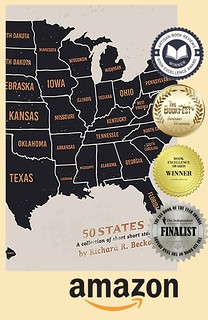
This novel has really made the rounds, selling more than 1,500 copies in its first year and still going strong with seven literary awards and a 4.7-star rating on Amazon, 4.6-star rating on Goodreads.  And while my next novel — to be released later this year — is unrelated, Third Wheel (much like 50 States) serves a great introduction to my work, which often explores perception and identity (among other themes). 

There has always been something that draws me to stories about teens who face adult problems like Brady does (and I did growing up in the inner-city of Milwaukee and later Las Vegas). So, I thought it might be worthwhile to share a list of eight books with similar themes, settings, or tones, based on their exploration of adolescence, social dynamics, crime, or transformative personal journeys.

8 Books To Read If You Loved Third Wheel 

1. "The Outsiders" by S.E. Hinton. Often cited as a direct comparison, "The Outsiders" is a classic coming-of-age novel about teenage outcasts navigating social hierarchies, loyalty, and conflict in 1960s Oklahoma. Like "Third Wheel," it explores the struggles of a young protagonist (Ponyboy Curtis) seeking belonging amidst a backdrop of violence and fractured relationships. Both novels feature tight-knit friend groups, betrayal, and a raw depiction of youth. Readers of "Third Wheel" who enjoyed its emotional depth and group dynamics will resonate with this.

Key Themes: Belonging, class conflict, loyalty, growing up too fast. Setting: 1960s Tulsa, Oklahoma

2. "Rumble Fish" by S.E. Hinton. Another Hinton novel, "Rumble Fish" delves into the life of Rusty-James, a troubled teen idolizing his older brother and grappling with his place in a rough, urban world. Its gritty tone, focus on teenage rebellion, and exploration of fractured family dynamics echo "Third Wheel’s" portrayal of Brady’s struggles with his mother and criminal entanglements. The cinematic, almost noir-like atmosphere aligns with Becker’s vivid depiction of 1982 Las Vegas.

Key Themes: Identity, brotherhood, rebellion, loss of innocence. Setting: 1970s urban America. 

3. "All the Smoke" by Matt Barnes and Stephen Jackson. While a memoir rather than fiction, "All the Smoke" captures the raw, unfiltered experiences of two NBA players growing up in challenging environments, facing peer pressure, and navigating risky social circles. Its focus on resilience and self-discovery mirrors Brady’s journey in "Third Wheel." The conversational style and emphasis on overcoming adversity make it a compelling non-fiction parallel for readers drawn to Becker’s realistic characters and themes of belonging.

Key Themes: Resilience, peer influence, and self-discovery. Setting: Various U.S. cities, 1980s–2000s.

4. "The Catcher in the Rye" by J.D. Salinger. This iconic novel follows Holden Caulfield, a disillusioned teen grappling with alienation and the search for authenticity in a world he perceives as hypocritical. Like Brady in "Third Wheel," Holden navigates a complex social landscape without reliable adult guidance, making both stories resonate with readers who connect with themes of isolation and self-definition. Becker’s nod to Salinger as an influence further ties these works together.

Key Themes: Alienation, identity, rebellion, loss of innocence. Setting: 1950s New York City.

5. "Blacktop Wasteland" by S.A. Cosby. Cosby’s modern crime thriller centers on Beauregard “Bug” Montage, a former getaway driver pulled back into crime, set against a gritty Southern backdrop. While the protagonist is older, the novel’s exploration of loyalty, moral dilemmas, and the pull of a criminal underworld parallels Brady’s entanglement with drugs and the Mob in "Third Wheel." Cosby’s vivid prose and focus on personal transformation align with Becker’s storytelling, and Becker cites Cosby as an inspiration.

Key Themes: Crime, loyalty, redemption, family dysfunction. Setting: Contemporary rural Virginia.

6. "Less Than Zero" by Bret Easton Ellis. Set in 1980s Los Angeles, this novel follows Clay, a college student returning home to a world of privilege, apathy, and drug-fueled excess. Its bleak, unflinching look at youth caught in destructive social circles mirrors "Third Wheel’s" depiction of Brady’s descent into Las Vegas’s criminal fringe. Both novels capture the era’s underbelly and the emotional toll of seeking connection in a morally compromised world.

Key Themes: Alienation, decadence, loss of innocence, peer pressure. Setting: 1980s Los Angeles.

7. "Monster" by Walter Dean Myers. This young adult novel follows Steve Harmon, a Black teenager on trial for his alleged involvement in a robbery gone wrong. Like "Third Wheel," it explores a young protagonist’s struggle with identity, peer influence, and the consequences of association with crime. The emotional weight of navigating a harsh adult world and seeking redemption makes it a strong parallel, especially for readers who appreciate "Third Wheel’s" socio-analytical depth.

Key Themes: Identity, justice, peer pressure, moral ambiguity. Setting: 1990s New York City.

8. "Tangerine" by Edward Bloor. This young adult novel centers on Paul Fisher, a visually impaired teen navigating family dysfunction and social challenges in a new Florida town. Like Brady, Paul seeks belonging amidst peer dynamics and uncovers darker truths about his surroundings. While less crime-focused, its coming-of-age themes and focus on resilience in a flawed world align with "Third Wheel’s" emotional core.

Key Themes: Identity, family secrets, resilience, social dynamics. Setting: 1990s Florida.

These books were chosen for their shared focus on coming-of-age struggles, complex social dynamics, and/or gritty settings. While "Third Wheel’s" blend of thriller elements and emotional depth makes it unique, the listed books capture similar vibes through teenage protagonists, crime, or transformative journeys. 

Like "Third Wheel,", these books can be found anywhere books are sold. "Third Wheel," along with my short story collection "50 States," will be featured on part one of my 2025 national book tour. 

Sunday, April 6

Signing Books: Early Summer Book Tour '25


Yesterday was a breezy Saturday in Las Vegas, but it still made for a beautiful day for a book signing. I had set up an Authors & Artists tent at the Art in the Park event at Bruce Trent Park to gauge interest in some new prints of Jenna Becker's artwork. (We still need to set up an online store for her.) 

This was the second time I attended the event. The first time was in 2021 to show her what it might be like to meet people and sell her work as a high school sophomore. This time I was on my own (with my wife's help) because Jenna is studying art and psychology at Augustana College in Illinois. Her presence was missed, but it was nice to do this for her. We'll send a check of her proceeds in a few weeks.

Book signings and author events.

One of the vendors sitting across from me thought I was doing it wrong, introducing myself and then my daughter's work as I gauged which might interest them more. I usually steered the conversation to whichever side of the table they leaned toward. The vendor, a Russian immigrant selling handmade Italian clothing, would say: "No, like this! Here is an award-winning author. Look, look! Here he is. Signing books. Today only!" 

I had to laugh because inevitably someone would gravitate to my tent and buy a book when she did this. It's the kind of thing someone can do for you, but you can't do it on your own for yourself as an author. Of course, it's a little different at bookstores. Book lovers always seem interested in authors, even if you don't write their genre. If you greet them at the door, many will come and say hello. I had a virtual sellout in Reno last March, so I had to add inventory to what the store had ordered.

The Reno signing coincided with visiting my son. The early summer signing coincides with driving my daughter home from school for the summer. I'll fly into Chicago, drive to Rock Island, and start the tour. 

Pretour Warmups

March 1: Barnes & Noble in Reno, Nevada 

April 5: Art in the Park in Las Vegas, Nevada

Early Summer Book Tour '25

May 24: The Atlas Collective in Moline, Illinois 

May 25: Lion's Tooth in Milwaukee, Wisconsin 

May 27: Paperbacks and Pieces in Winona, Minnesota 

May 28: B&N Sioux Falls in Sioux Falls, South Dakota 

May 29: Books A Million in Rapid City, South Dakota 

May 30: Bookin' IT in Casper, Wyoming 

May 31: Barnes & Noble - Sandy in Salt Lake City, Utah 

Late Summer Book Tour '25 

Stay tuned! 

The second book tour will take place toward the end of August and the beginning of September when my daughter returns to school. Just like the early summer tour, it will follow a different route than last year's cross-country adventure or the one I am sharing above. Several people have asked me to visit Kansas, so I'd like to draw a route through Arizona, southern Colorado, Kansas, Missouri, and Illinois. 

We'll see. Bookstores sometimes influence my route. I'm more apt to stay in and highlight communities where I sign books. This worked very well last year, when I chronicled the trip with my daughter on the first half and my wife on the second half of the tour on TikTok, Facebook, Instagram, X, and elsewhere

It was a lot of fun, leading me back to this post's beginning. I didn't sell many books at Art in the Park, and that's okay, as I also don't expect every signing to be like Reno (more than 40 in two hours). While it's always nice to sell well or out, I measure success with every connection I make—the readers, managers, and owners—and every experience it affords me with my son and/or daughter. 

I will continue doing it, too, as long as giving her rides back and forth across the country makes sense. (I may even duplicate the first leg of the '24 Book Tour in 2026 as I'll have a new book out by then!) And when it doesn't? Then, I'll likely set up some New England and southern state tours with my wife. 

We'll see. The point is that in-person events aren't just about sales. They're about enjoying a life well lived. You can't ask for more than that, except maybe Book Tour T-shirts. Ha. 

Friday, February 14

Blogging: An Evolution Over 20 Years


"Words. Concepts. Strategies.," which was sometimes called the Copywrite, Ink. blog started in 2005, was the same year the first blogger received White House press credentials, The Huffington Post was founded, and YouTube was launched. It was nine years after the first blog was created by Justin Hal in 1994, which meant I was a latecomer to blogging but still an early adopter.

I remember telling students about the blog in my Writing for Public Relations course at the University of Nevada, Las Vegas. Many were working professionals in the field, trying to navigate how to write a decent news release that wasn't automatically filed in the trash can. 

My company wrote scores of news and feature releases in those days, which populated many newspapers, magazines, and trade journals. It was relatively easy work compared to advertising campaigns, mainly because I always approached the business of public relations (in part) like a journalist. Simply put, journalists want good stories, so public relations practitioners should be keen on providing great ones.

They understood the point, but not the next one I made in 2005. Even then, I saw the writing on the wall. 

"The importance of business blogs shouldn't be underestimated," I told them. "While you can sometimes get your message out through the media, you can always get it out on a blog."

They laughed in 2005. Nobody laughed in 2010. Nowadays, blogs have become so integrated and essential for websites that some people wonder if standalone blogs matter anymore when compared to the more common methods of engagement—social networks like Facebook, Threads, Instgram, BlueSky, X, etc. or video platforms like YouTube and TikTok. 

What's The Takeaway After 20 Years of Blogging. 

Admittedly, sometimes I wonder if it's fair to say I've been blogging for 20 years here, given how sporadic I've been with any new material. While this used to be a daily between 2007 and 2010, I've struggled to meet the minimum — one post-every-month goal — that I set in 2016. Maybe this will be the year I hit it! 

It's not for lack of creating content. I'm engaged daily on social networks and produce two or more videos a week across multiple channels. I also write blog posts for other companies — most of which read like articles with varied degrees of formality. 

Most of the other people I used to engage with on blogs have moved on, too. If they write anything, it's likely to appear on LinkedIn or Medium instead of a blog. And, more likely, they mention whatever they used to write about in podcasts and vodcasts, having abandoned their blogs long ago. 

I even wrote about that one. For all those who once dreamed their words of wisdom would be permanently etched into the Internet, it turned out that all they really created was a 404 crisis — thousands of once interlinked posts now lead nowhere. On occasion, I'm even asked why I bother, given that I could probably put my url to better use as an author website. Except ...

This blog has about 3.8 million views and about 30,000 visits a month, whether I add new content or not. The traffic is primarily the result of more than 1,700 posts, many of which are more akin to articles. And for everyone who visits and opts for the way it looks on the web, they can easily find other ways to connect or find my books. In sum, it would be crazy to give it up. It makes much more sense to add to it, here and there, when I have some time. And when it makes sense. 

What are some of the top most-read articles on this blog? 

Knowing When To Post | 17k reads. This was one of my first living case studies on why not everybody was right for the blogging world. Every now and again, the post surges when someone wants to understand the early social media crisis sparked by one company. 

Signing Books: Five Places I Visited For 50 States | 16.6k reads. It's a story about the bookstores I visited during my first year as an author. I still need to write one up pertaining to the national book tour I took last year. Who knows? Maybe next month. 

The Elephant In The Room Of Banned Books | 15.3k reads. This post remains relevant for two reasons. First, because people keep banning books, which is as stupid as it is sad. Second, the point of the article was to illustrate it isn't a red-blue issue. Everybody is up for banning what they don't like. 

Writing Books: Third Wheel As A Debut Novel | 11.7k reads. This post should answer the question many authors ask regularly. Would starting a blog be worth it? Granted, this blog is 20 years old. However, seeing that two of the top five posts are related to my books, I'd say there is something to it. 

Being Steve Jobs: Where The Open Forum Got It Wrong | 10.7k reads. My well-read rebuttal to an American Express article continues to be read and referenced as I made the case that, yes, business owners do want to be like Steve Jobs. Sure, they don't want to be exactly like him. But there was plenty to learn. 

Incidentally, the Steve Jobs and Third Wheel posts are among the top reads in the last 12 months, with 5.45k and 3.29 reads, respectively. Others that always get traction include If 80 Percent of People Won't Change, Why Force Them?, Revealing Weakness: Brian Solis On Authority, and Understanding Viewers.: TV's New Consumers. The latter is one of many articles I wrote about a television show called Jerico, which was canceled only because it had the misfortune of being launched during the dawn of streaming services. 

Nowadays, networks and streaming services would love to have that audience. (The same could be said for Veronica Mars and The Black Donnellys, too). And that brings me to another reason I'll keep this blog around. It is a a written history as it happened — personal, global, and within the blogosphere.

And with that, I will end on one final point. I miss the days when banging out a post in an hour to start my day was part of the routine. It was fun and exciting to see them catch people's interest. But more than that, there was a note of civility and sometimes even chivalry during the golden age of blogs. 

Words weren't so easily tossed about like quips and clubs and weapons, nor were they so easily thrown away. Reputation seemed to matter, and responses were well reasoned. I think we could use a bit more of that today instead of always shooting for the soundbite. Alas, that, too, is part of history.


Blog Archive

by Richard R Becker Copyright and Trademark, Copywrite, Ink. © 2021; Theme designed by Bie Blogger Template